

NECO Agricultural Science OBJ
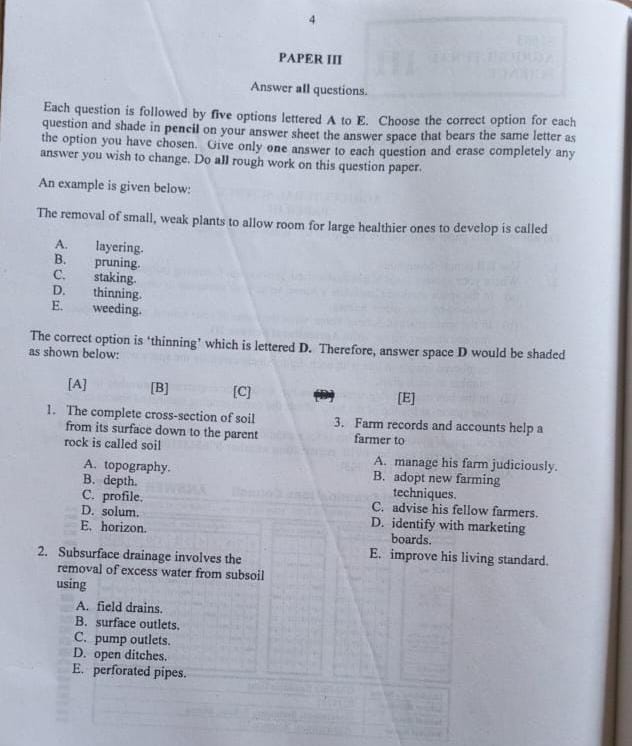
AGRIC OBJ (ZAMFARA STATE)
- B. tillage
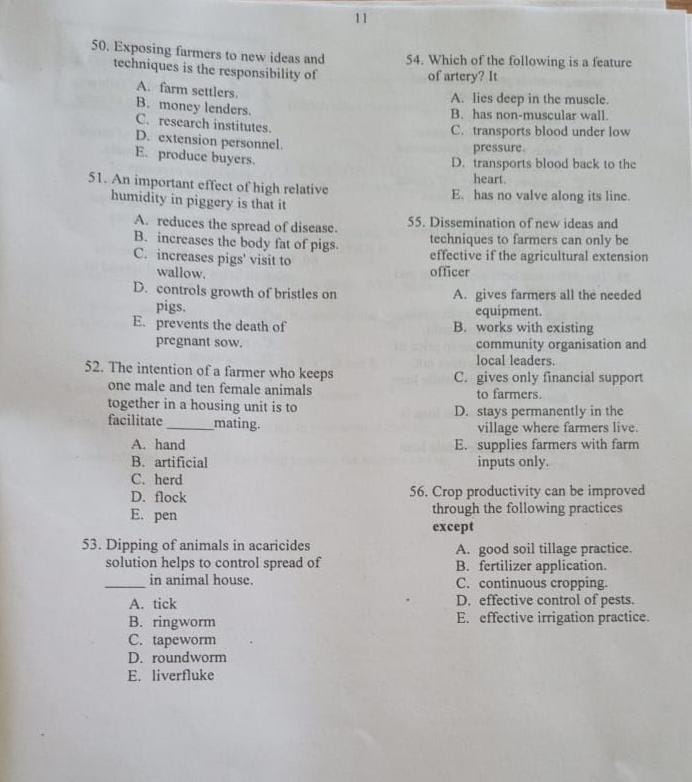
- D. extension workers
- A. Maize
- A. budding
- B. medium
- C. Cyperus rotundus
- A. Harvesting trees
- D. bladder
- A. gestation
- C. tap-root
- B. ewe
- E. budding
- C. marking
- A. photosynthesis
- B. scarification of seeds
- B. Heating and cooling of parent rocks
- E. Land tenure
- A. is renewable in nature
- C. Drip
- A. insect pest infestation
- C. Cowpea
- D. fertility
- E. adoption of hygienic practices
- D. large crop plants if not properly supervised
- C. marcotting
- D. use of electro-fishing method
- E. brucellosis
- A. produce offspring that can withstand unfavourable weather
- A. increase production of food
- B. rural-urban migration
- E. mealybug
- B. separate grains from the stalk
- A. consumers will buy more yams willingly
- D. tractors
- B. castration
- A. Foot and mouth
- C. Overgrazing
- B. provide a queen
- D. Rodenticides
- B. calcium sulphate
- C. tenancy
- D. soil sample has large pore spaces
- B. organic matter content is high
- B. farm offices on high elevation
- E. 1,250
- A. Continuous cropping
- D. Cultivation of crops in rows
- A. seeds have two seed leaves
- E. organise annual farmers festival and shows
- A. ₦700
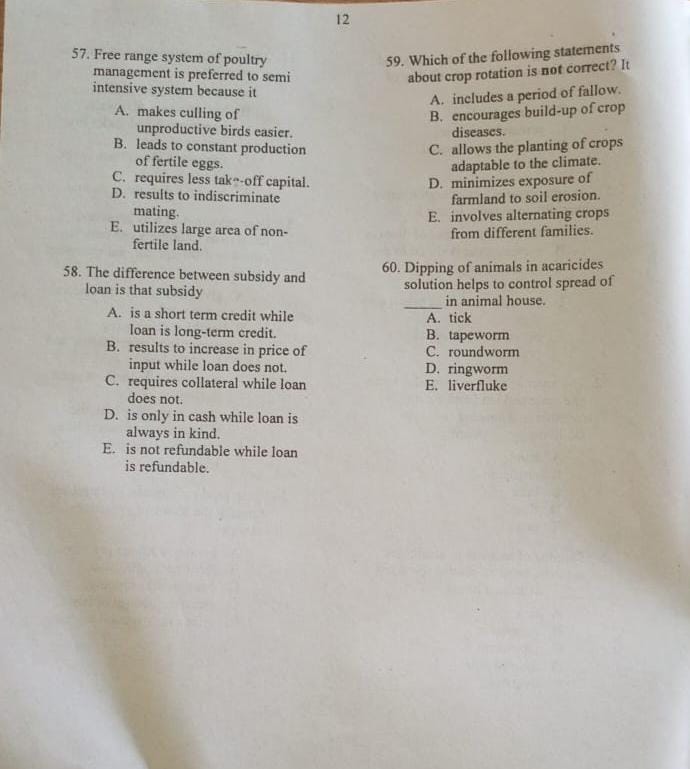
- A. requires less take-off capital
- B. spraying of Bordeaux mixture
- A. Reseeding
- D. works with existing community organisation and local leaders
- B. Farmers may be stimulated to produce more
- D. act as wind breaks
- C. regulate mesh size
- B. 4
- D. tick
- A. Newcastle
AGRIC OBJ (FCT ABUJA)
- D. harvesting cereals
- E. manage his farm judiciously
- A. hutch
- C. pruning
- A. calcium and phosphorus
- C. abomasum
- A. 1.0 m × 1.0 m
- D. leaf
- A. castrated pig
- D. Ipomoea batatas
- E. 3–6 years
- E. readiness of farmers to adopt research innovations
- D. rainfall
- E. mastitis
- E. becomes fragmented over time
- C. consumers will buy more yams willingly
- C. prevent environmental degradation
- E. Panama
- B. Calopogonium mucunoides
- C. mealybug
- A. Sprinkler
- C. Ndama
- E. damage crop plants if not properly supervised
- D. pig
- C. abomasum
- B. castration
- D. it affects the metabolic processes in fish
- E. middlemen
- E. produce offspring that can withstand unfavourable weather
- B. 45%
- B. reduce breakages
- B. flat
- B. seeds
- A. Foot and mouth
- C. sulphur
- B. increase production of food
- C. gene
- D. continuous grazing of land
- E. mate with queen
- E. inheritance
- B. inheritance
- C. clay
- D. organic matter content is high
- C. Continuous cropping
- C. farm offices on high elevation
- B. results to the death of fingerlings
- B. seeds have two seed leaves on germination
- C. after one year in nursery
- B. ₦900
- A. continuous cropping
- D. IV
- B. tick
- A. works with existing community organisation and local leaders
- C. increases pigs’ visit to wallow
- C. serve as wind-breaks
- D. 4
- D. Farmers may be stimulated to produce more
- C. encourages build-up of crop diseases
- C. increases pasture productivity
- A. has no valve along its line
AGRIC OBJ (SOKOTO STATE)
- C. Ipomoea batatas
- D. castrated pig
- C. kidney
- D. alley farming
- D. rainfall
- A. dolomite
- B. abomasum
- D. hutch
- B. art of planting both food crops and forest trees
- D. restrict animal’s movement
- A. water
- D. plate-like
- C. Hevea braziliensis
- A. seeds
- E. nitrosomonas
- A. becomes fragmented over time
- D. chemical
- A. Calopogonium mucunoides
- B. castration
- B. middlemen
- B. Cassava mosaic
- C. reduces amount of annual rainfall
- B. Balsam
- A. symbiosis
- C. sulphur
- C. 45%
- C. Rapid cooling and solidification of rocks
- D. nitrogen
- E. Pneumonia
- D. mate with queen
- A. mealybug
- E. reduce breakages
- E. harvesting rice with combined harvester
- A. Arachis hypogea
- C. produce offspring that can withstand unfavourable weather
- E. grafting
- B. 5%
- E. increase in population
- E. sharpening the blade regularly
- B. symbiosis
- E. inheritance
- D. organic matter content is high
- A. confirm the presence of carbon dioxide
- D. Continuous cropping
- A. improve soil aeration
- D. farm offices on high elevation
- D. Cultivation of crops in definite sequence
- E. 20,000
- D. prone to inbreeding depression
- E. deep litter
- A. continuous cropping
- D. 1
- D. ₦900
- D. encourages build-up of crop diseases
- C. IV
- B. uprooting and burning infected crops
- C. increases pigs’ visit to wallow
- B. Farmers may be stimulated to produce more
- B. has no valve along its line
- B. Newcastle
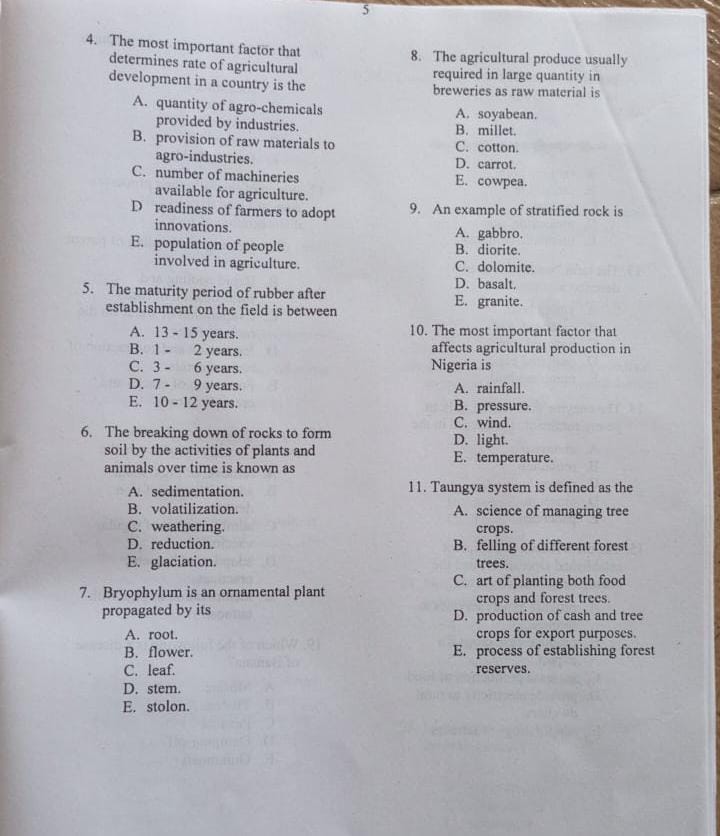
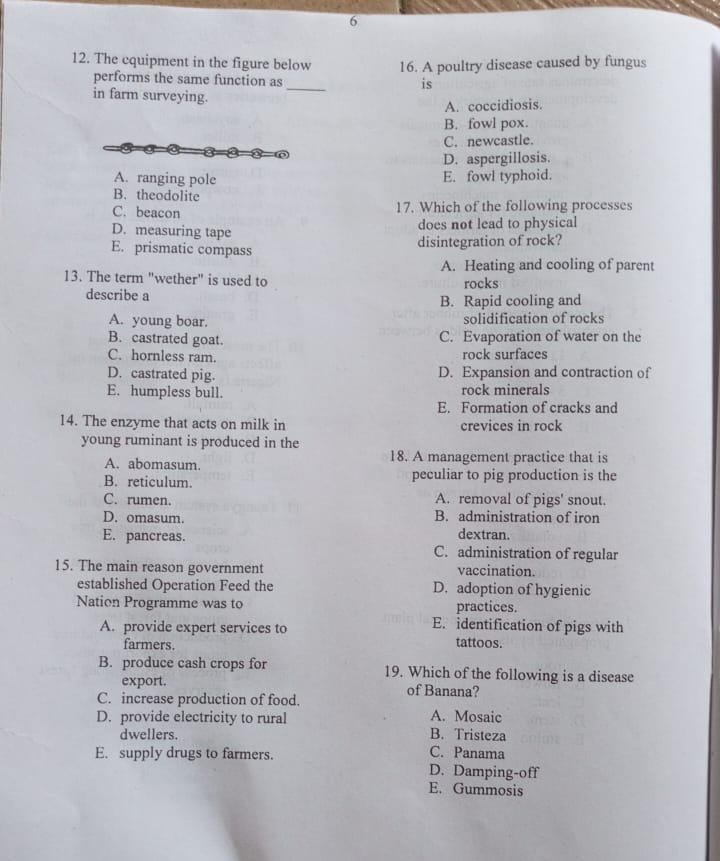
AGRIC OBJ (DELTA STATE)
- C. profile
- E. perforated pipes
- A. manage his farm judiciously
- D. readiness of farmers to adopt innovations
- E. 10–12 years
- C. weathering
- C. leaf
- A. soybean
- C. dolomite
- A. rainfall
- C. art of planting both food crops and forest trees
- D. measuring tape
- D. castrated pig
- E. pancreas
- C. increase production of food
- D. aspergillosis
- B. Rapid cooling and solidification of rocks
- A. removal of pigs’ snout
- C. Panama
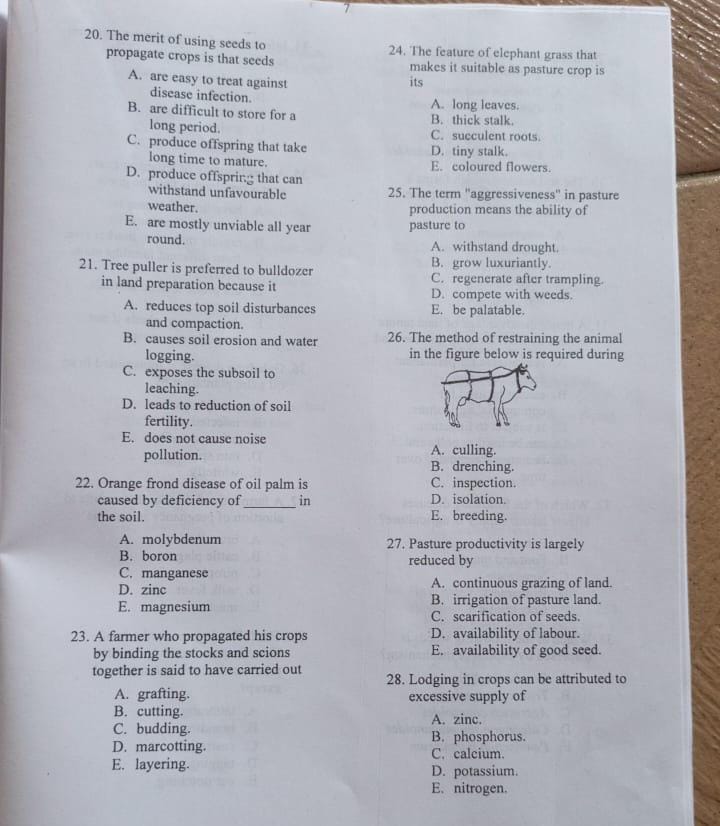
- A. are easy to treat against disease infection
- B. causes soil erosion and water logging
- B. boron
- A. grafting
- B. thick stalk
- C. regenerate after trampling
- B. drenching
- A. continuous grazing of land
- E. nitrogen
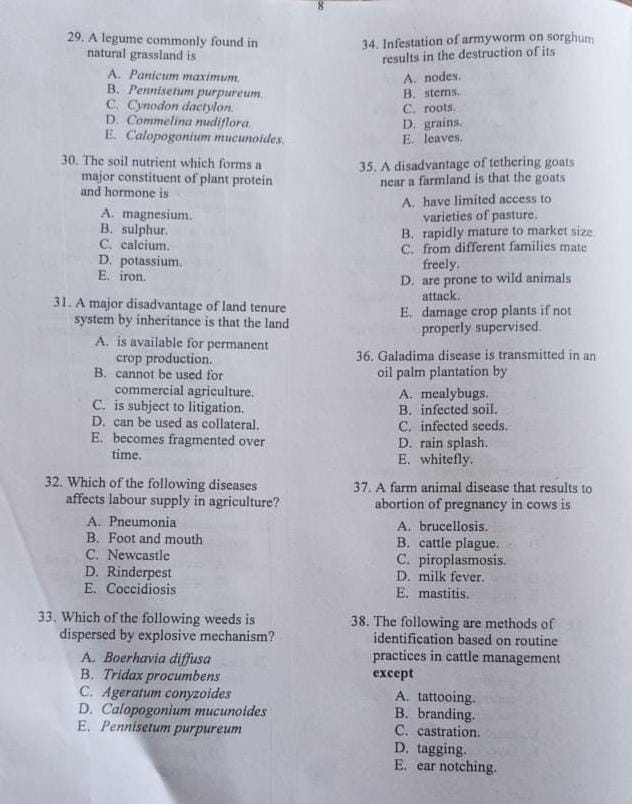
- E. Calopogonium mucunoides
- B. sulphur
- E. becomes fragmented over time
- A. Pneumonia
- D. Calopogonium mucunoides
- E. leaves
- E. damage crop plants if not properly supervised
- A. mealybugs
- A. brucellosis
- C. castration
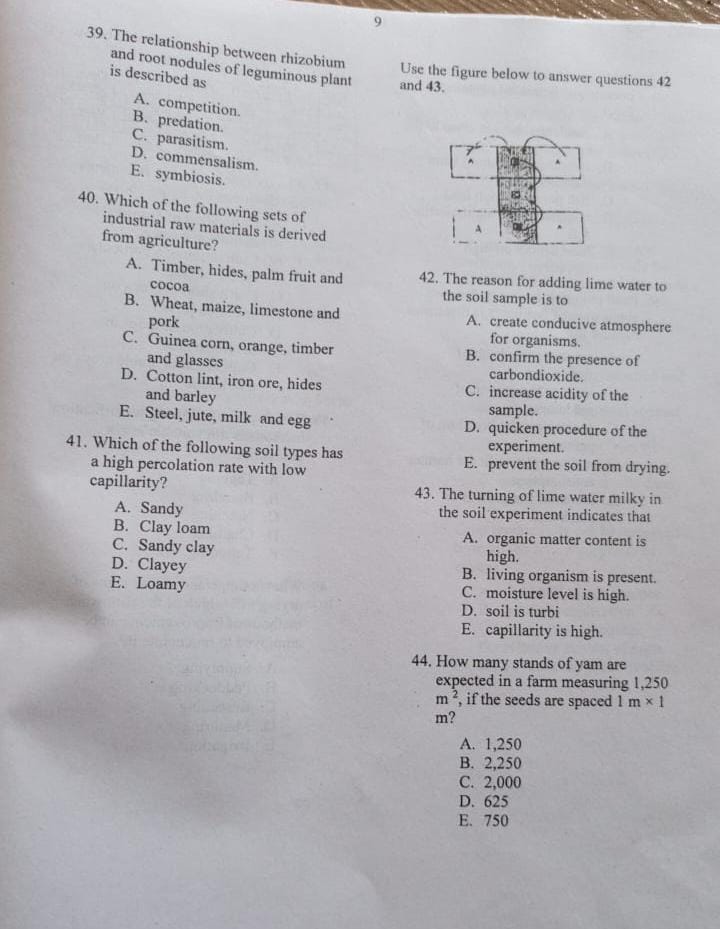
- E. symbiosis
- A. Timber, hides, palm fruit and cocoa
- A. Sandy
- B. confirm the presence of carbon dioxide
- A. organic matter content is high
- A. 1,250
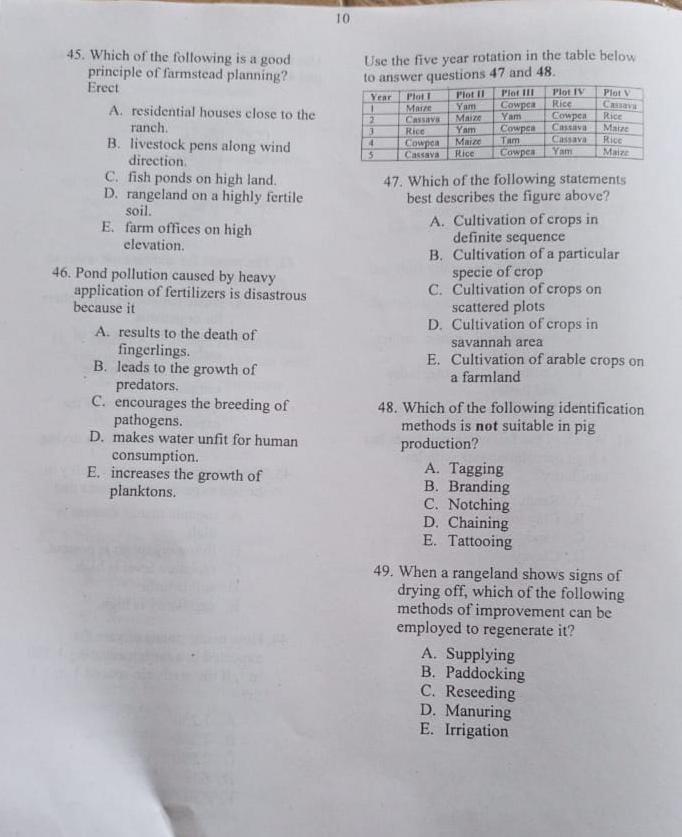
- E. farm offices on high elevation
- E. increases the growth of planktons
- A. Cultivation of crops in definite sequence
- D. Chaining
- C. Reseeding
- D. extension personnel
- C. increases pigs’ visit to wallow
- C. herd
- A. tick
- E. has no valve along its line
- B. works with existing community organisation and local leaders
- C. continuous cropping
- C. requires less take-off capital
- E. is not refundable while loan is refundable
- B. encourages build-up of crop diseases
- A. tick
AGRIC OBJ (ENUGU STATE)
- C. art of planting both food crops and forest trees
- E. androgen
- A. N.P.K. 20-5-10
- C. cotton
- E. dolomite
- D. grading
- C. abomasum
- C. 1.0 m × 1.0 m
- D. wax
- E. restrict animal’s movement
- B. pruning
- E. photosynthesis
- D. trimming flowers
- B. adhesives
- C. always requires high initial cost
- D. furrow wheel
- D. long leaves
- D. consumers will buy more yams willingly
- B. pancreas
- D. clean clearing
- A. Stylosanthes gracilis
- D. setting of trap
- C. paying of landing taxes by fishermen
- B. aspergillosis
- C. seeds
- C. thinning
- B. bleaching of leaves
- B. Calopogonium mucunoides
- D. mealybug
- E. strongly acidic
- D. are easy to treat against disease infection
- E. becomes fragmented over time
- C. nitrogen
- B. symbiosis
- D. 5%
- E. hydrogen ions
- C. mate with queen
- C. Panama
- B. removal of pigs’ snout
- E. symbiosis
- C. food
- A. confirm the presence of carbon dioxide
- C. ensure that pores are filled with air
- B. 1,250
- E. Continuous cropping
- E. results to death of fishes
- D. seeds have two seed leaves on germination
- B. cowpea
- E. controls price of produce
- A. extension personnel
- A. herd
- B. Reseeding
- C. uprooting and burning infected crops
- B. spraying fungicides on the plant
- A. 15–20 days
- A. prone to inbreeding depression
- A. 1
- B. ₦900
- A. cervix
- A. Newcastle
AGRIC OBJ (PLATEAU STATE)
- A. restrict animal’s movement
- C. perforated pipes
- D. wax
- A. udder
- A. readiness of farmers to adopt innovations
- A. grading
- B. plate-like
- B. measuring tape
- D. rainfall
- B. art of planting both food crops and forest trees
- B. Ipomoea batatas
- E. 1.0 m × 1.0 m
- B. trimming flowers
- A. thinning
- B. mealybugs
- A. damage crop plants if not properly supervised
- E. Arachis hypogaea
- B. Rapid cooling and solidification of rocks
- C. magnesium
- A. nitrogen
- C. long leaves
- E. Ndama
- B. consumers will buy more yams willingly
- D. reduce breakages
- D. middlemen
- E. increase in population
- B. Panama
- B. castration
- D. drip
- A. Calopogonium mucunoides
- D. seeds
- A. flat
- E. continuous grazing of land
- B. 5%
- D. removal of pigs’ snout
- D. it affects the metabolic processes in fish
- B. strongly acidic
- A. paying of landing taxes by fishermen
- C. 5%
- C. food
- A. Timber, hides, palm fruit and cocoa
- D. soil sample contains fine particles
- E. living organism is present
- D. increases the growth of planktons
- E. results to death of fishes
- C. 1,250
- E. anchor itself
- B. after one year in nursery
- D. is not refundable while loan is refundable
- C. Farmers may be stimulated to produce more
- D. Reseeding
- C. 0
- C. requires less take-off capital
- E. increases pasture productivity
- E. increases pigs’ visit to wallow
- D. birds
- D. 4
- A. spraying fungicides on the plant
- C. prone to inbreeding depression
- A. tick
AGRIC OBJ (ANAMBRA STATE)
- B. The exporters
- E. Plate-like
- C. Perforated pipes
- B. Abomasum
- D. Trimming flowers
- B. Millet
- E. N.P.K. 20-5-10
- D. Art of planting both food crops and forest trees
- D. Udder
- D. Ipomoea batatas
- A. Water
- A. Dolomite
- D. Androgen
- D. Debeaking
- C. Mealybug
- B. Flat
- D. Calopogonium mucunoides
- A. Brucellosis
- A. Inspection
- B. Arachis hypogaea
- E. Castration
- A. Strongly acidic
- D. Mate with queen
- C. Continuous grazing of land
- D. Compete with weeds
- A. Drip
- C. Grafting
- C. Hydrogen ions
- C. Nitrogen
- E. Long leaves
- D. Increase production of food
- E. Reduces top soil disturbances and compaction
- B. Foot and mouth
- D. Produce offspring that can withstand unfavourable weather
- E. Rapid cooling and solidification of rocks
- D. Middlemen
- D. Reduces amount of annual rainfall
- C. Encourage canopy formation
- C. Increase in population
- E. Inheritance
- B. Inheritance
- A. Living organism is present
- D. Confirm the presence of carbon dioxide
- C. Results to death of fishes
- A. Farm offices on high elevation
- E. 1,250
- A. 2250
- D. Cowpea
- E. Extension personnel
- C. Works with existing community organisation and local leaders
- A. Susceptible to animal diseases
- B. Serve as wind-breaks
- E. Increases pigs’ visit to wallow
- C. Cervix
- C. 3
- E. Is not refundable while loan is refundable
- D. II
- A. Has no valve along its line
- A. Continuous cropping
- B. Tick
AGRIC OBJ (EDO STATE)
- A. kidding
- D. androgen
- A. plate-like
- C. trimming flowers
- C. Ipomoea batatas
- C. The exporters
- A. restrict animal’s movement
- A. hutch
- A. photosynthesis
- A. alley farming
- E. water
- E. millet
- D. 25–30 cm × 75–80 cm
- B. mealybug
- E. 45%
- D. Rapid cooling and solidification of rocks
- E. symbiosis
- E. adhesives
- B. Perosis
- D. increase production of food
- A. it affects the metabolic processes in fish
- C. Bush burning
- C. middlemen
- B. eating while spraying
- C. drenching
- D. damage crop plants if not properly supervised
- C. saw
- A. Swelling of the abdomen
- E. harvesting rice with combined harvester
- A. pig
- B. Cowpea
- C. Cotton
- E. reduces amount of annual rainfall
- E. Calopogonium mucunoides
- D. magnesium
- E. drip
- C. seeds
- C. Arachis hypogaea
- D. strip cropping
- E. inheritance
- E. is slow in solidification while volcanic is rapid in solidification
- B. air
- A. sand
- B. improve soil aeration
- C. 1,250
- E. nitrogen
- A. seeds have two seed leaves on germination
- C. 90,000
- A. 1
- B. Reseeding
- C. pure-line
- A. ₦900
- E. deep litter
- C. Branding
- C. herd
- B. develop improved varieties of crops
- E. Farmers may be stimulated to produce more
- D. increases pigs’ visit to wallow
- D. encourages build-up of crop diseases
- D. 15–20 days
AGRIC OBJ (IMO STATE)
- C. shade
- C. 1.2 m × 1.2 m
- C. readiness of farmers to adopt innovations
- E. 7–9 years
- E. rainfall
- E. Egg → larva → nymph → adult
- B. udder
- A. weaning
- B. plate-like
- B. problem of middlemen
- C. Ridger
- D. abomasum
- B. perforated pipes
- E. becomes fragmented over time
- B. nitrogen
- E. hydrogen ions
- D. seeds
- B. paying of landing taxes by fishermen
- A. decomposition of organic materials
- D. strip cropping
- D. Pneumonia
- D. is a variable resource
- B. harvesting rice with combined harvester
- D. Sprinkler
- C. Anaemia
- E. chemical
- B. it affects the metabolic processes in fish
- D. leaves
- D. Handling them becomes easy
- B. Panama
- E. gene
- C. produce offspring that can withstand unfavourable weather
- E. vaccinating the animals
- C. thinning
- D. sulphur
- C. grafting
- E. waterleaf
- D. damage crop plants if not properly supervised
- C. Cassava mosaic
- D. Timber, hides, palm fruit and cocoa
- E. calcium bicarbonate
- D. living organism is present
- B. soil sample contains fine particles
- A. Continuous cropping
- A. are essential for chlorophyll formation
- A. Waste disposal unit should be located within farm area
- C. Cultivation of arable crops on a farmland
- C. anchor itself
- A. tick
- E. serve as wind-breaks
- D. ₦900
- C. Newcastle
- B. susceptible to animal diseases
- C. cervix
- E. VII
- A. aspergillosis
- D. promotes production of export crops only
- B. 2
- B. extension personnel
- D. spraying fungicides on the plant
AGRIC OBJ (LAGOS STATE)
- A. grading
- A. udder
- E. 1.0 m × 1.0 m
- A. androgen
- D. 25 × 30 cm × 75 × 90 cm
- D. art of planting both food crops and forest trees
- D. pruning
- A. root
- C. alley farming
- C. horizon
- B. diorite
- A. restrict animal’s movement
- C. kidney
- D. fresh leaves
- D. Newcastle
- B. are prone to wild animal attack
- D. castration
- C. prevents excessive water seepage
- E. 45%
- B. sprinkler
- A. seeds
- E. photoperiodism
- C. rapid cooling and solidification of rocks
- B. beetle
- C. continuous grazing of land
- D. Pennisetum purpureum
- B. magnesium
- C. thinning
- B. nitrogen
- E. drip
- B. isolation
- D. Mucuna utilis
- C. produce offspring that can withstand unfavourable weather
- A. Panama
- A. increase in population
- A. harvesting rice with combined harvester
- B. compete with weeds
- C. symbiosis
- B. 5%
- B. inheritance
- C. timber, hides, palm fruit and cocoa
- B. capillarity is high
- B. prevent water from mixing the soil
- B. leads to the growth of predators
- B. continuous cropping
- D. 1,250
- E. yam
- C. 81,000
- D. spraying fungicides on the plant
- A. price tends to fall
- B. 2
- E. effective control of pests
- B. ₦90,000
- C. ₦13,333.00
- C. swine
- E. chaining
- D. reduces weed infestation
- E. cervix
- D. deep litter
- B. organise annual farmers’ festival and shows
AGRIC OBJ (ADAMAWA STATE)
- A. Ipomoea batatas
- A. readiness of farmers to adopt innovations
- E. dolomite
- C. wax
- B. 25–30 cm × 75–90 cm
- B. art of planting both food crops and forest trees
- C. cotton
- D. cerebellum
- B. profile
- D. respiration
- E. 1.0 m × 1.0 m
- C. udder
- C. alley farming
- A. thinning
- E. photoperiodism
- B. profits of the producer will remain constant
- D. leaves
- D. continuous grazing of land
- E. Newcastle
- E. prevents excessive water seepage
- B. cassava mosaic
- A. removal of pig’s snout
- A. eating while spraying
- D. reduce breakages
- C. arrangement of soil particles in a sample
- B. produce offspring that can withstand unfavourable weather
- C. pheromone trapping
- D. feed
- B. drenching
- E. 5%
- B. Panama
- D. 45%
- D. increase production of food
- E. hydrogen ions
- A. castration
- E. it affects the metabolic processes in fish
- A. mastitis
- A. seeds
- C. symbiosis
- B. sandy
- E. slow in solidification while volcanic is rapid in solidification
- A. prevent water from mixing the soil
- B. capillarity is high
- C. are essential for chlorophyll formation
- B. leads to the growth of predators
- C. continuous cropping
- A. yam
- B. 81,000
- D. 19th–20th March, 2027
- D. deep litter
- D. swine
- E. encourages build-up of crop diseases
- A. reseeding
- E. spraying fungicides on the plant
- A. promotes production of export crops only
- D. cervix
- D. avian influenza
- E. pure-line
- A. uprooting and burning infected crops
- C. VII
Answers Loading….
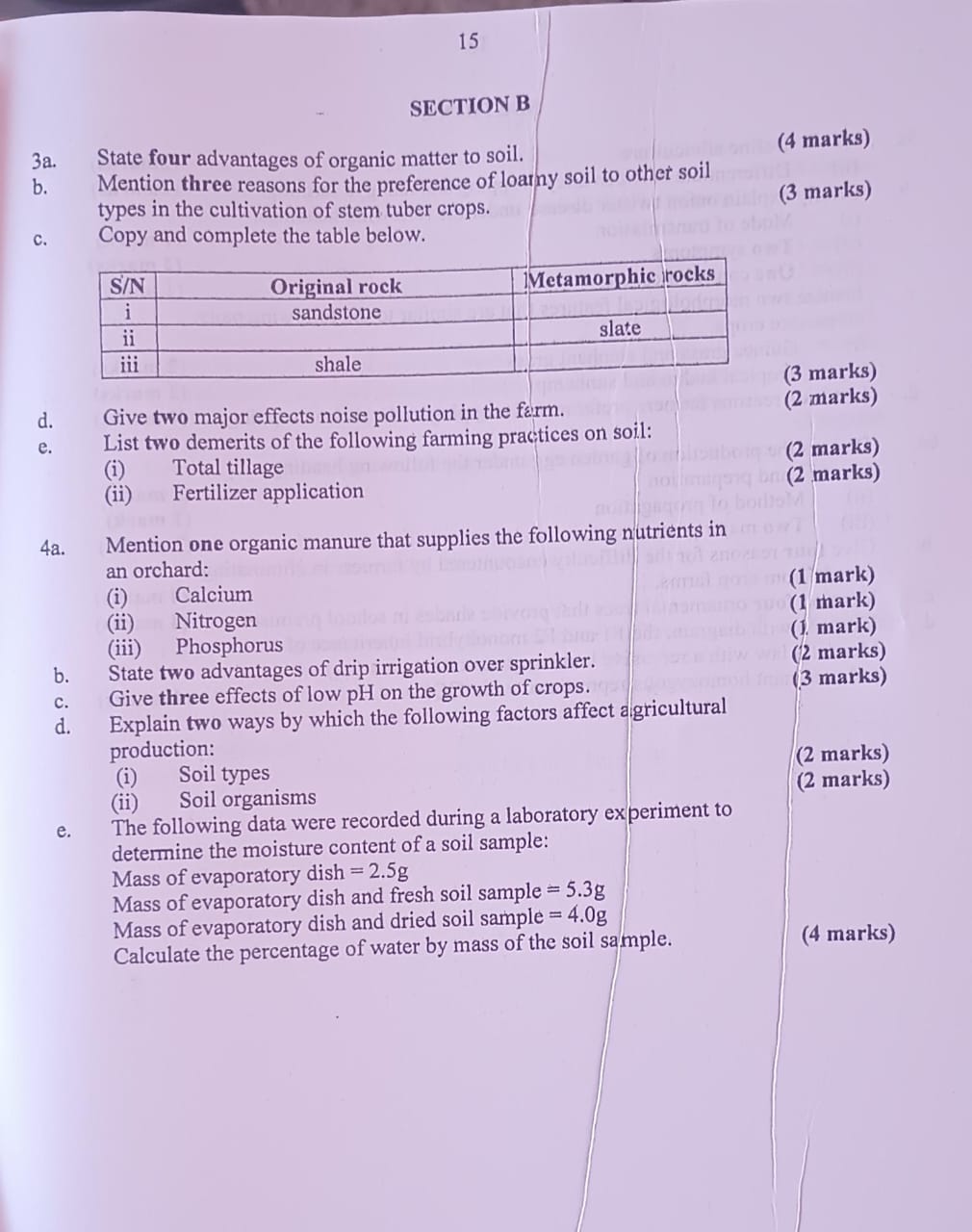
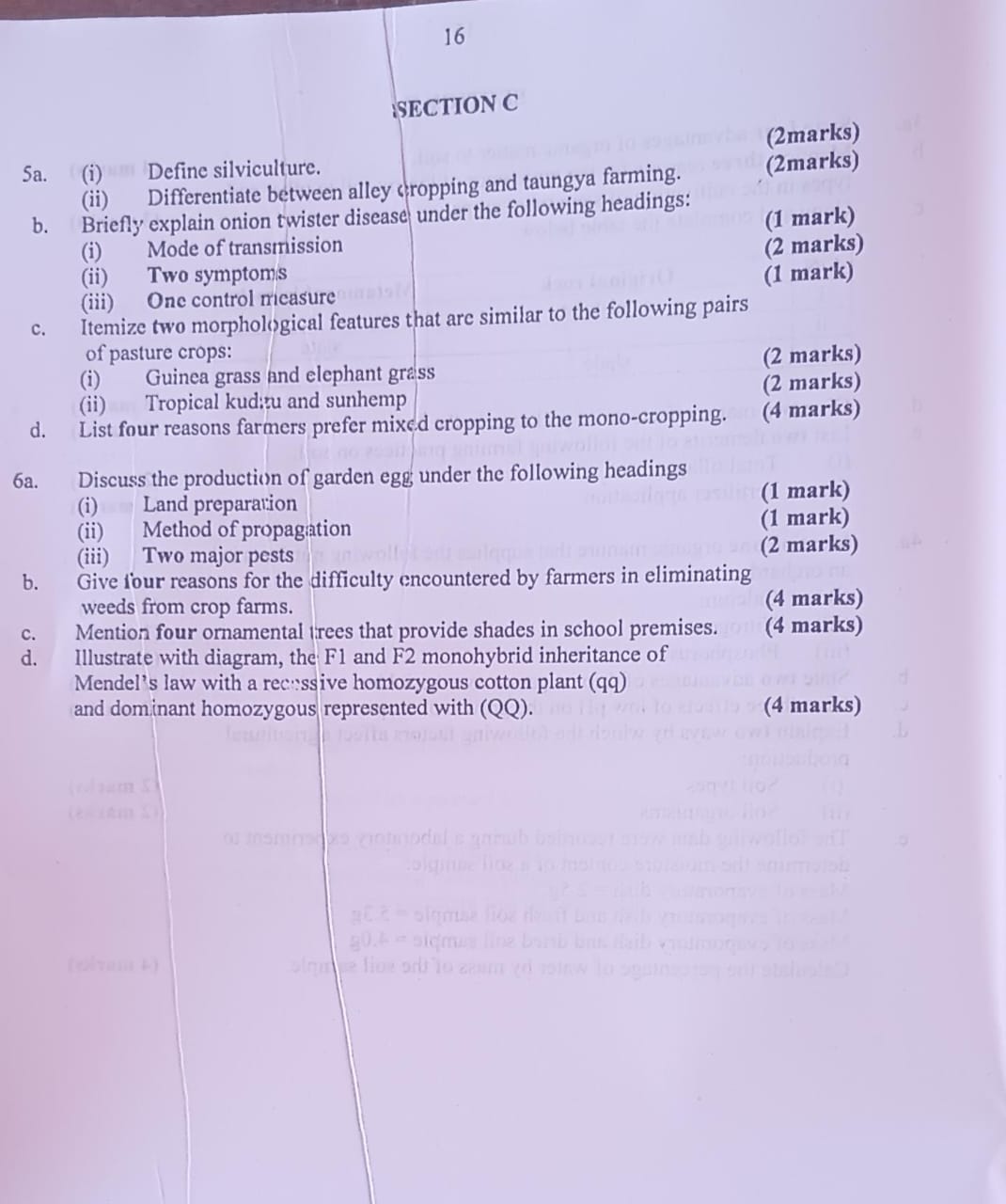
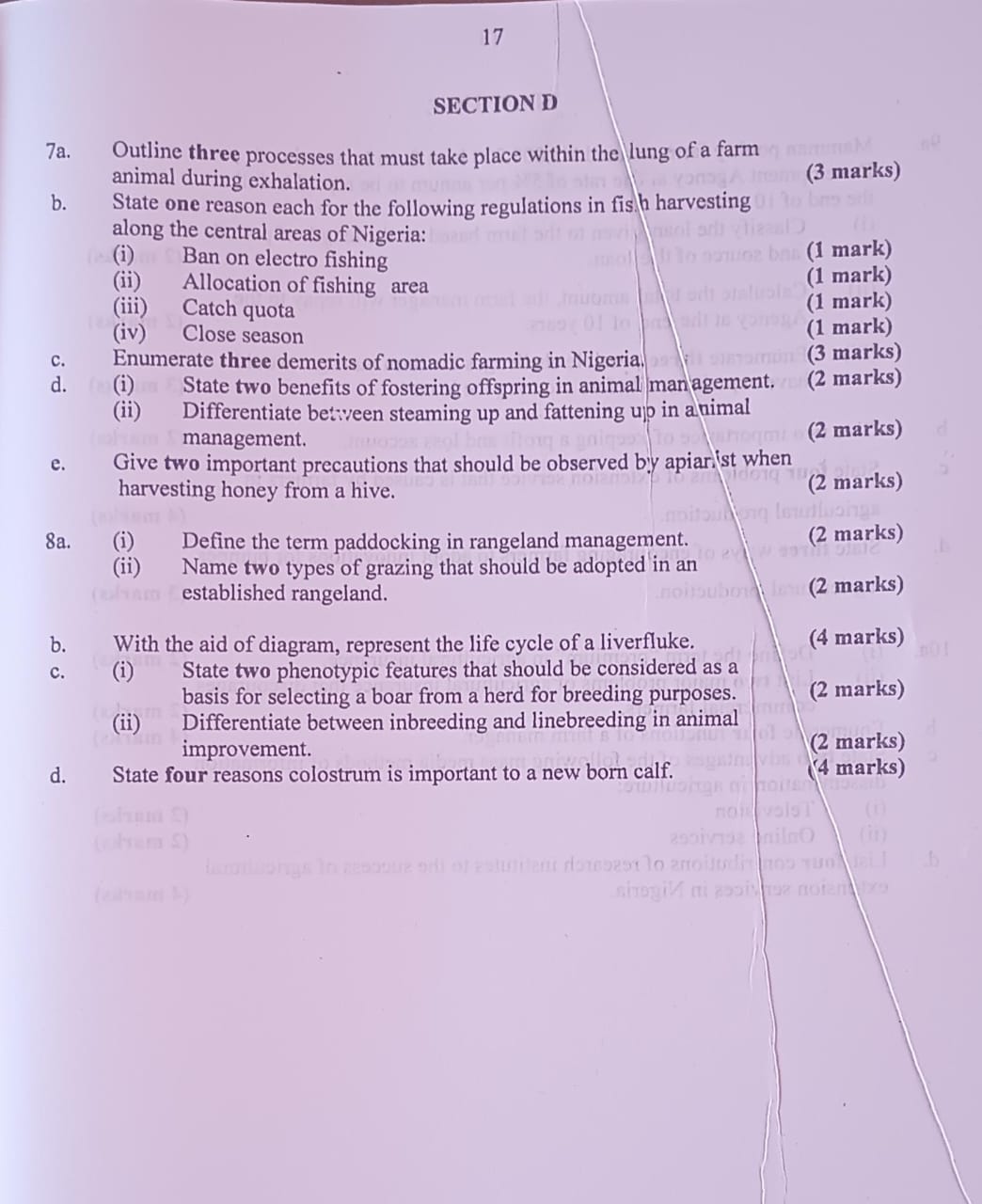
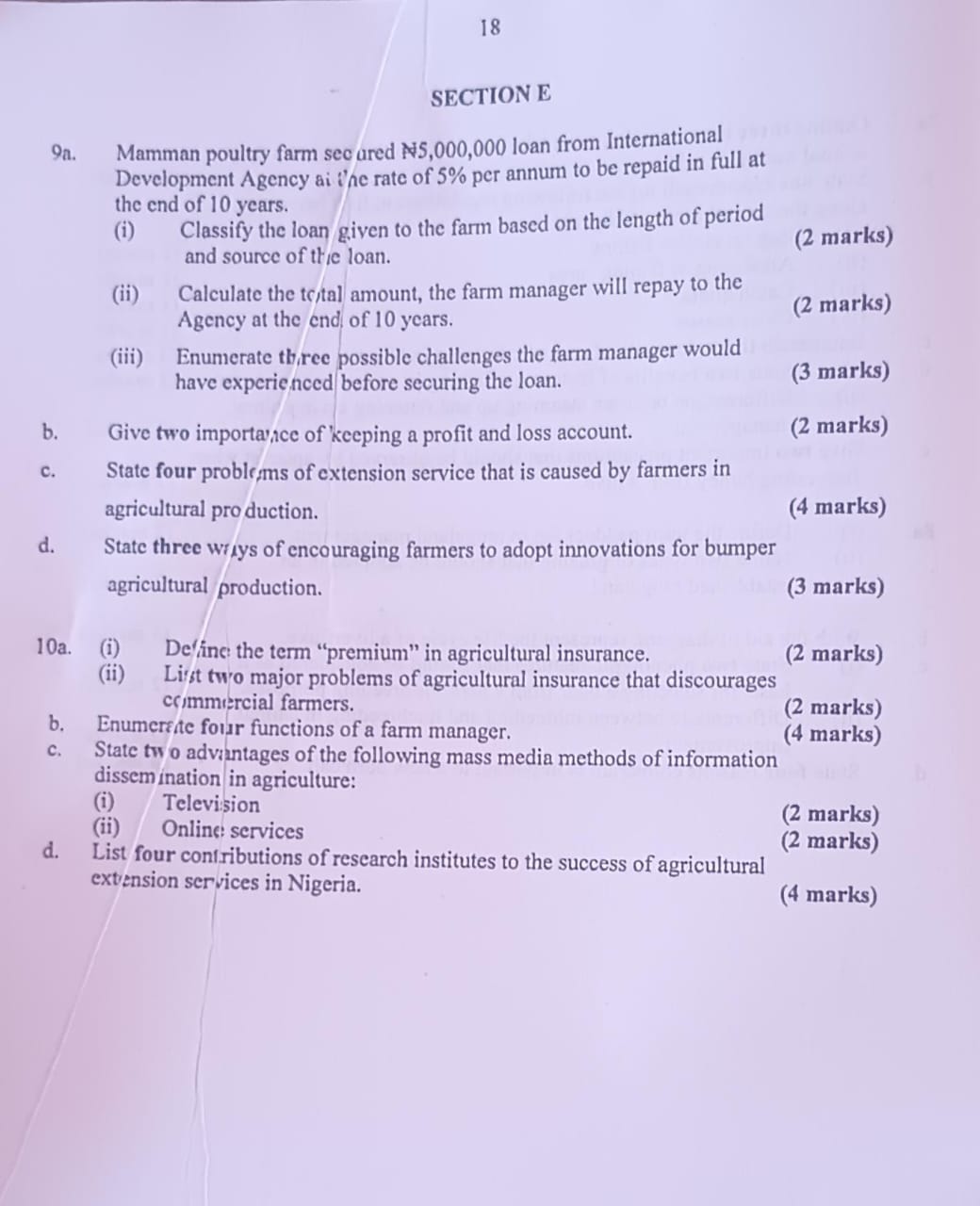
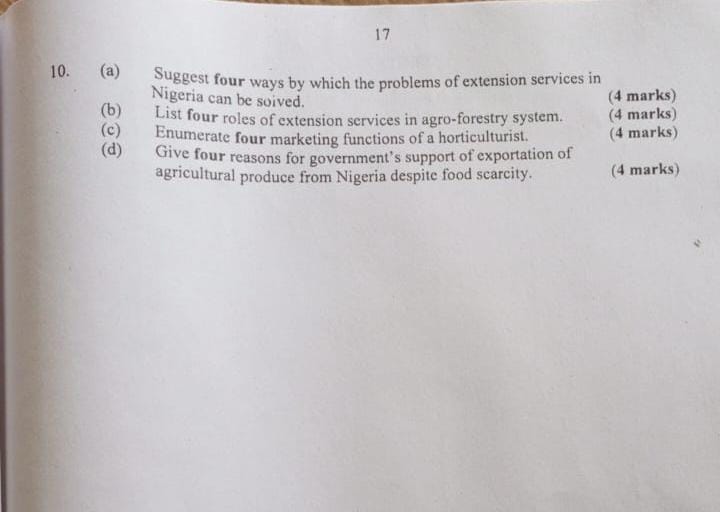
NECO Agricultural Science Essay
Compare the questions of each type with your own, of it matches, then open the PDF under it
TYPE A
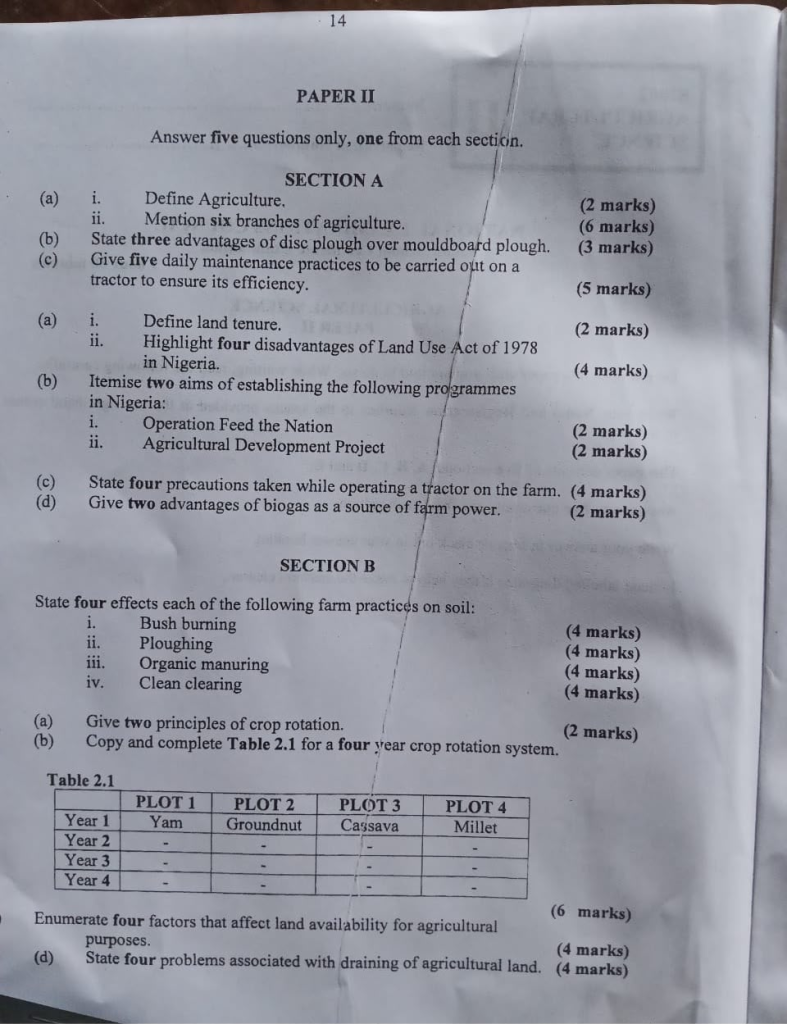
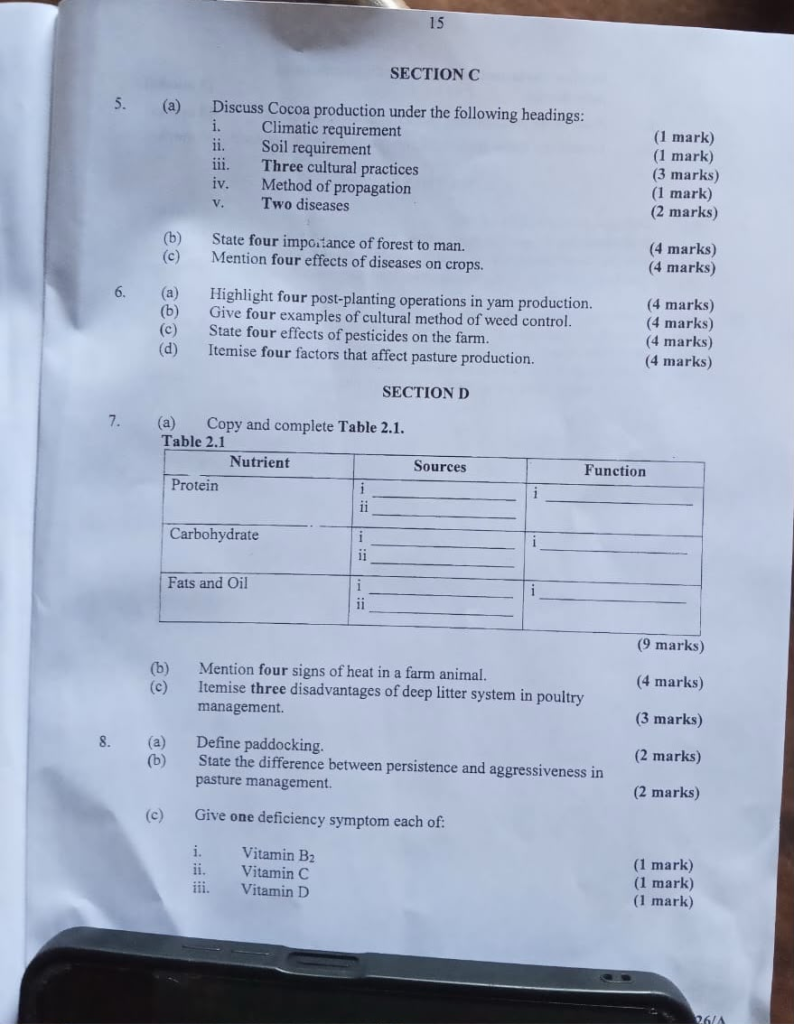
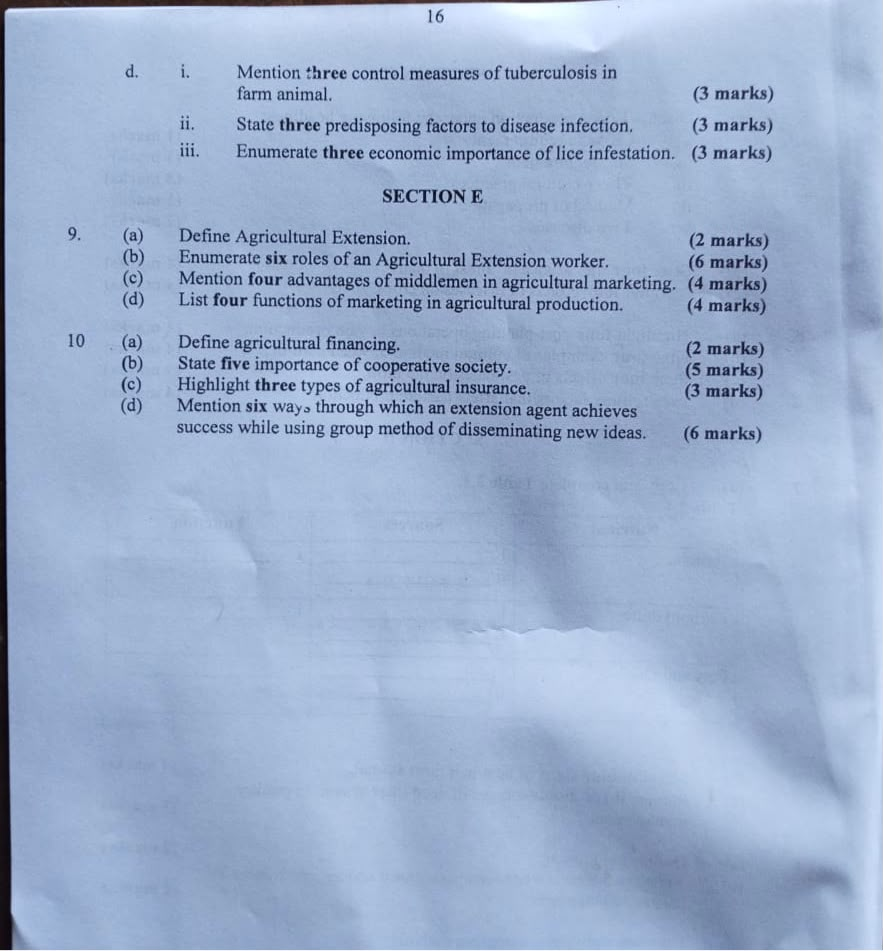
TYPE B
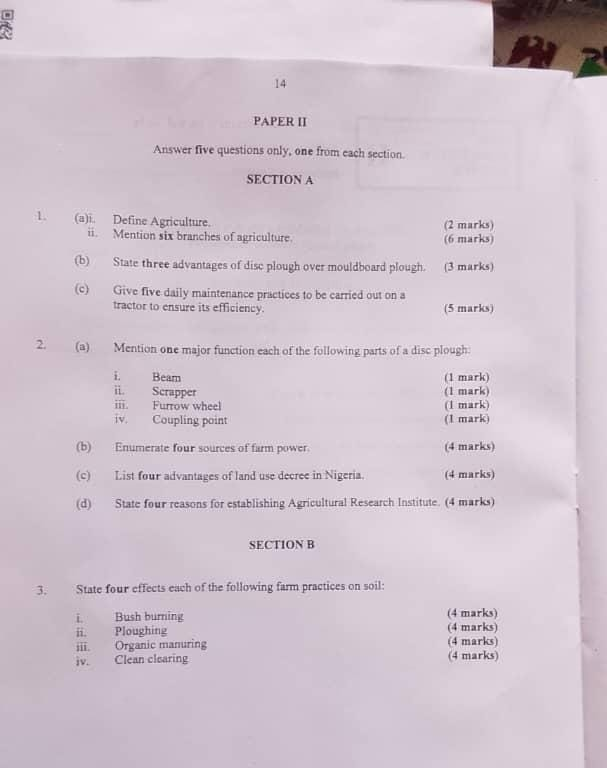
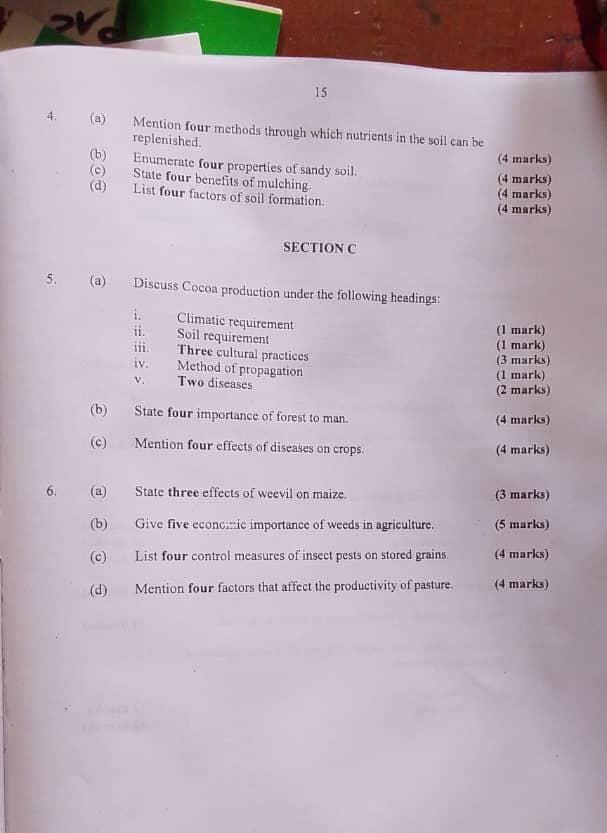
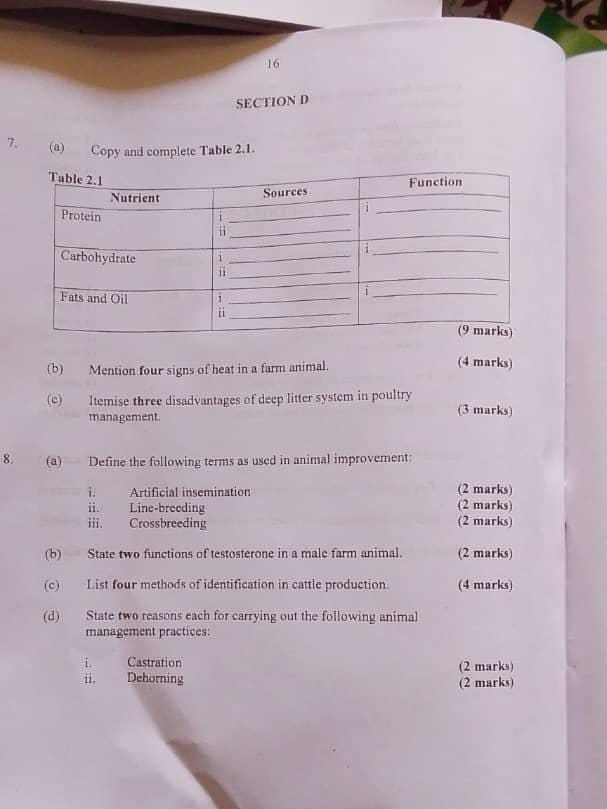
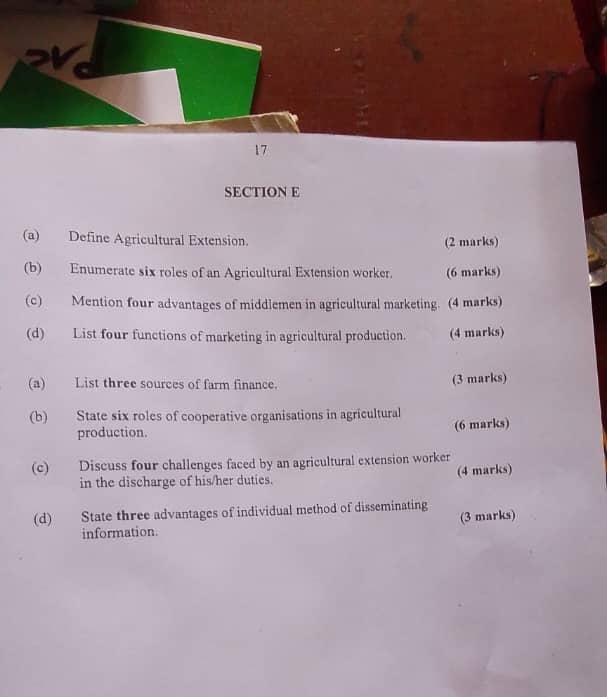
TYPE C
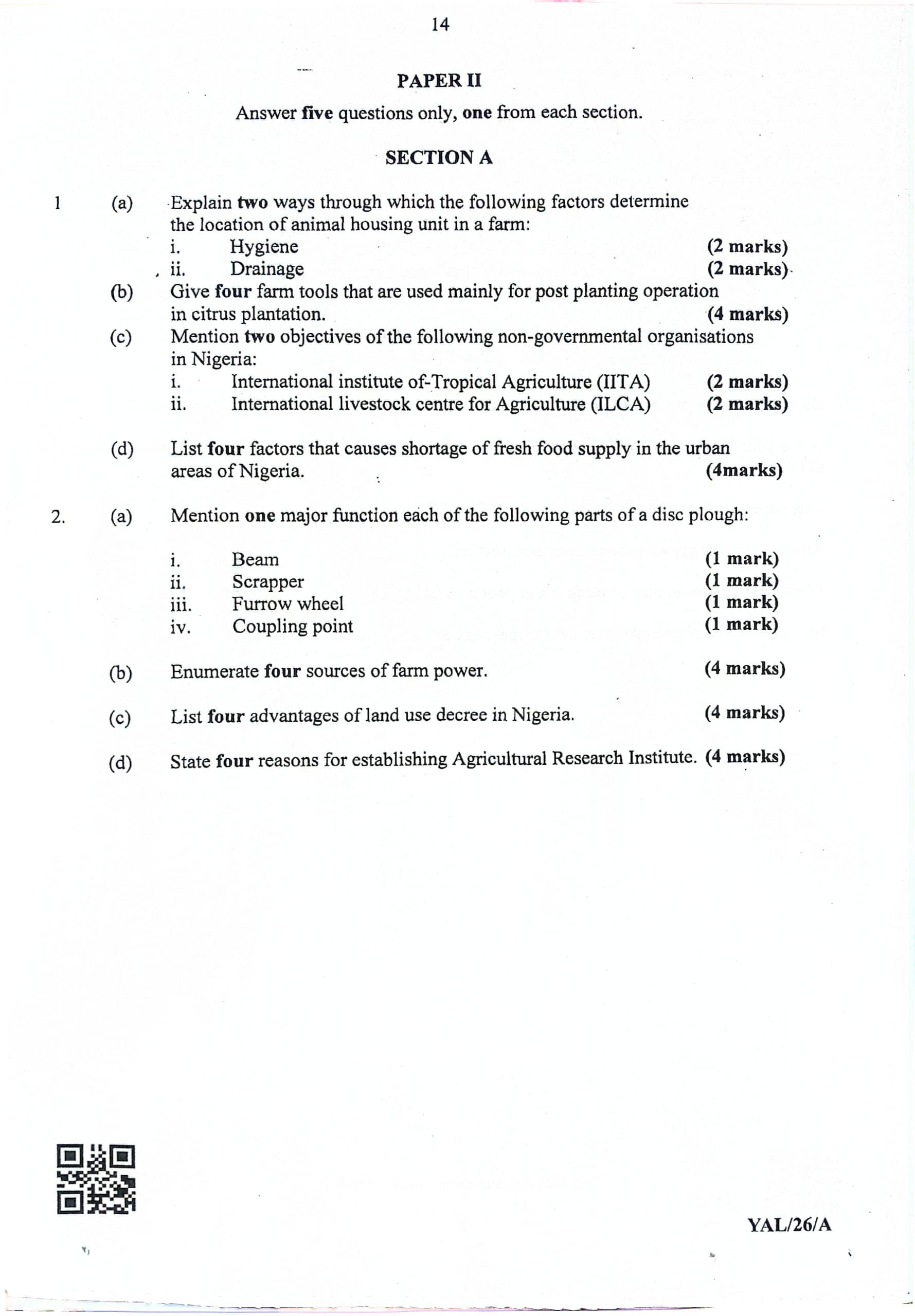
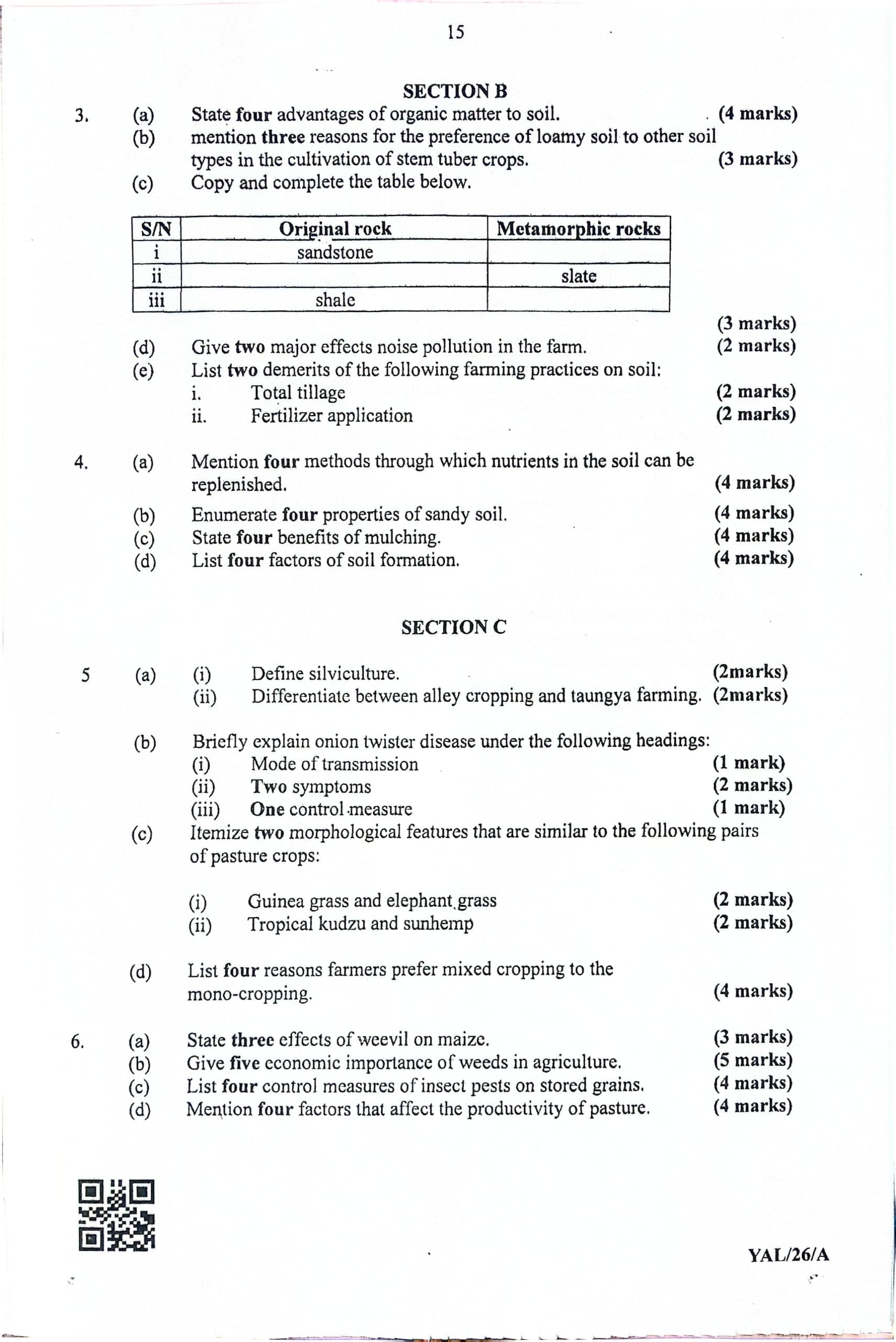
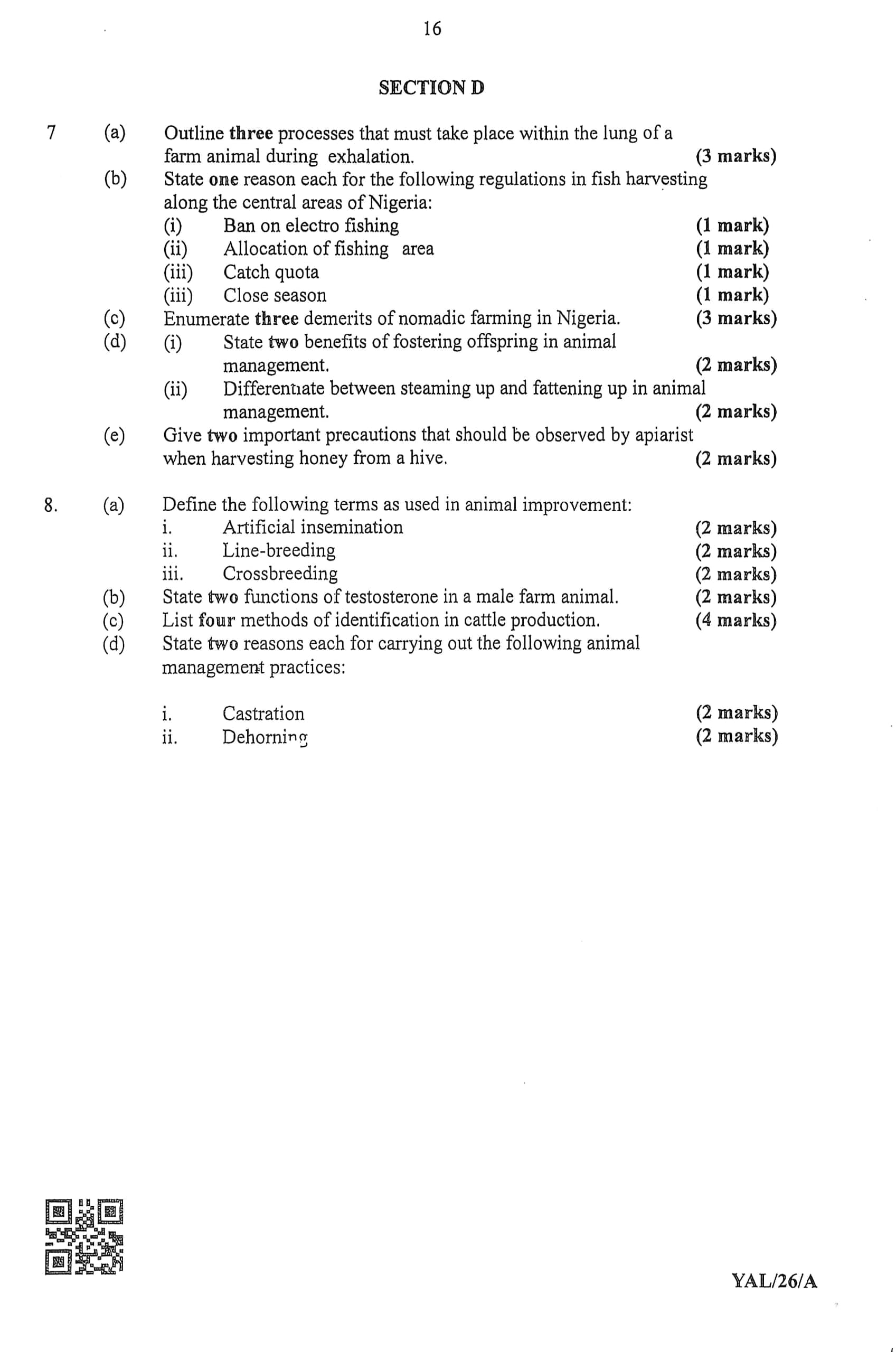
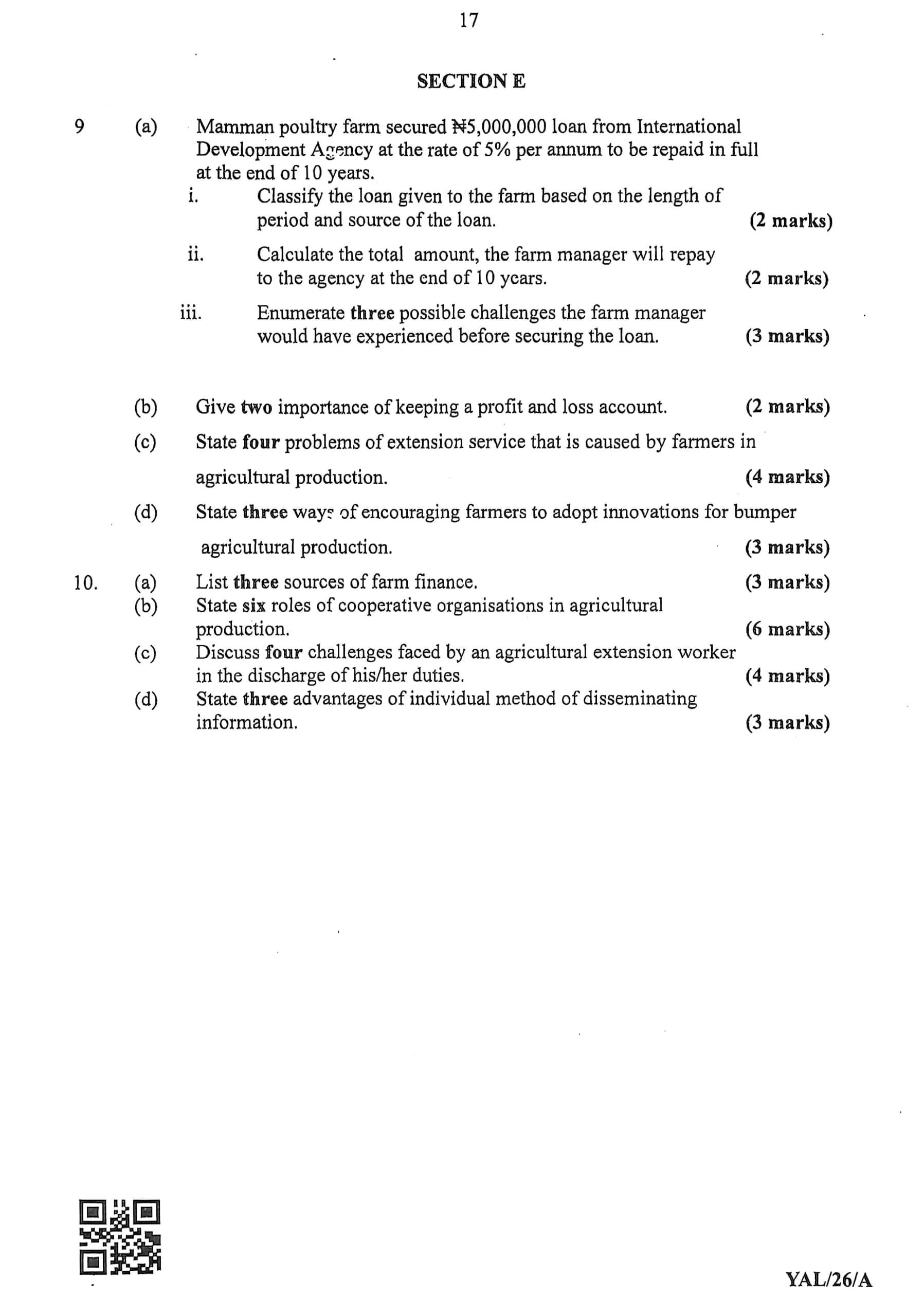
TYPE D
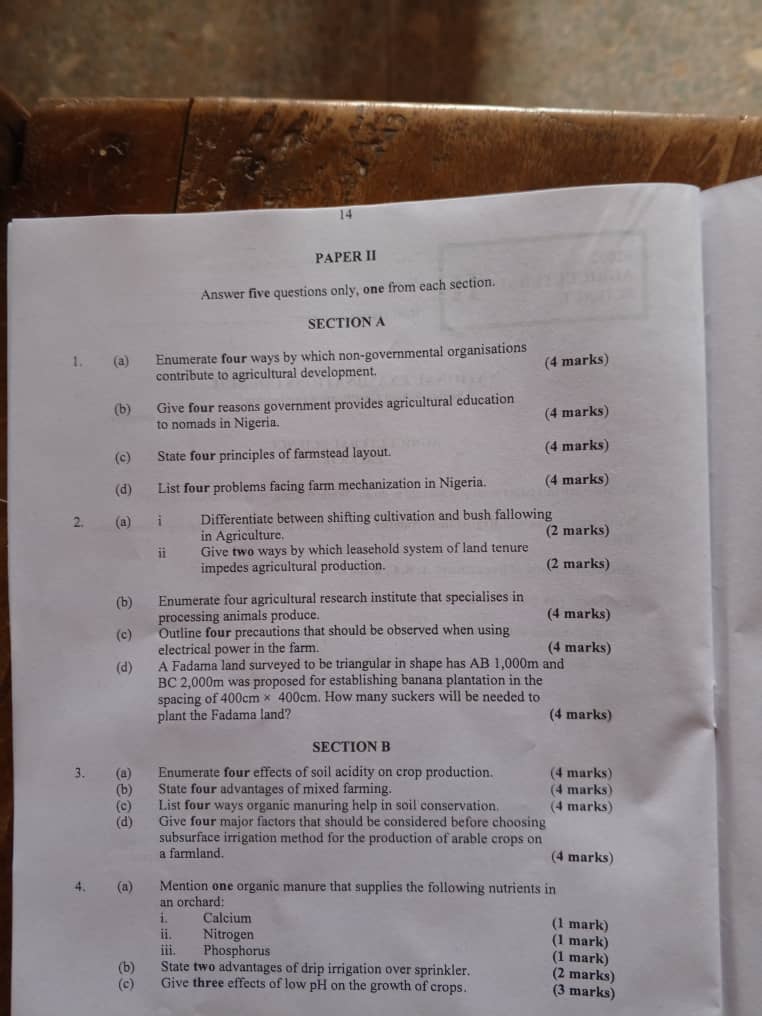
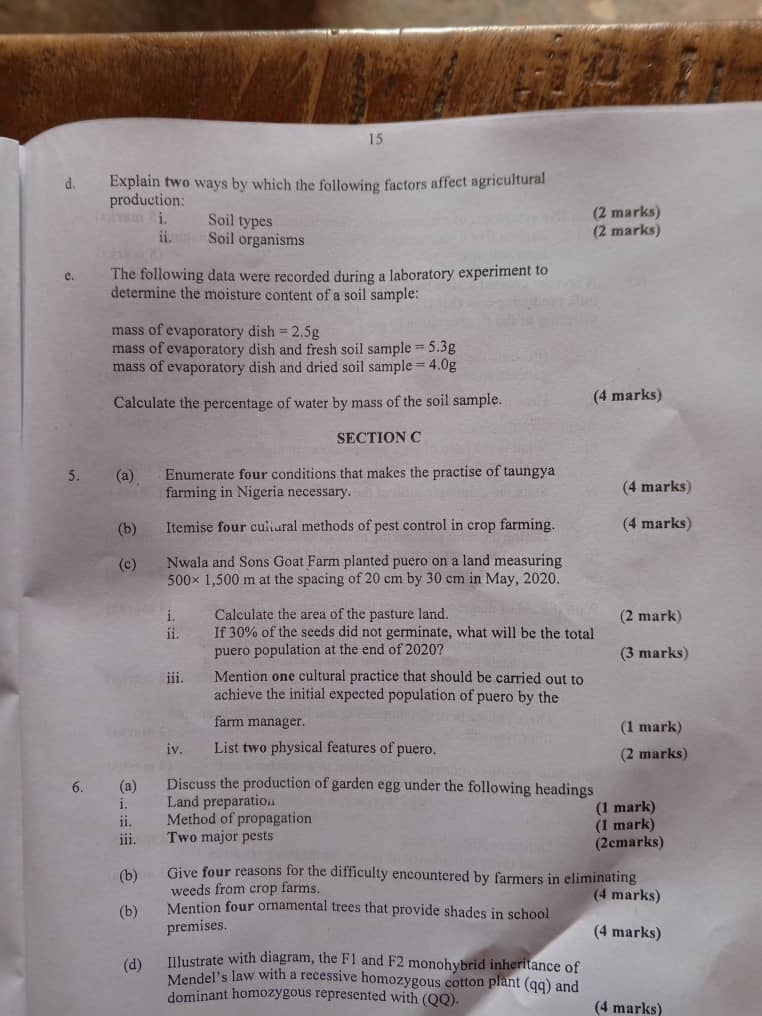
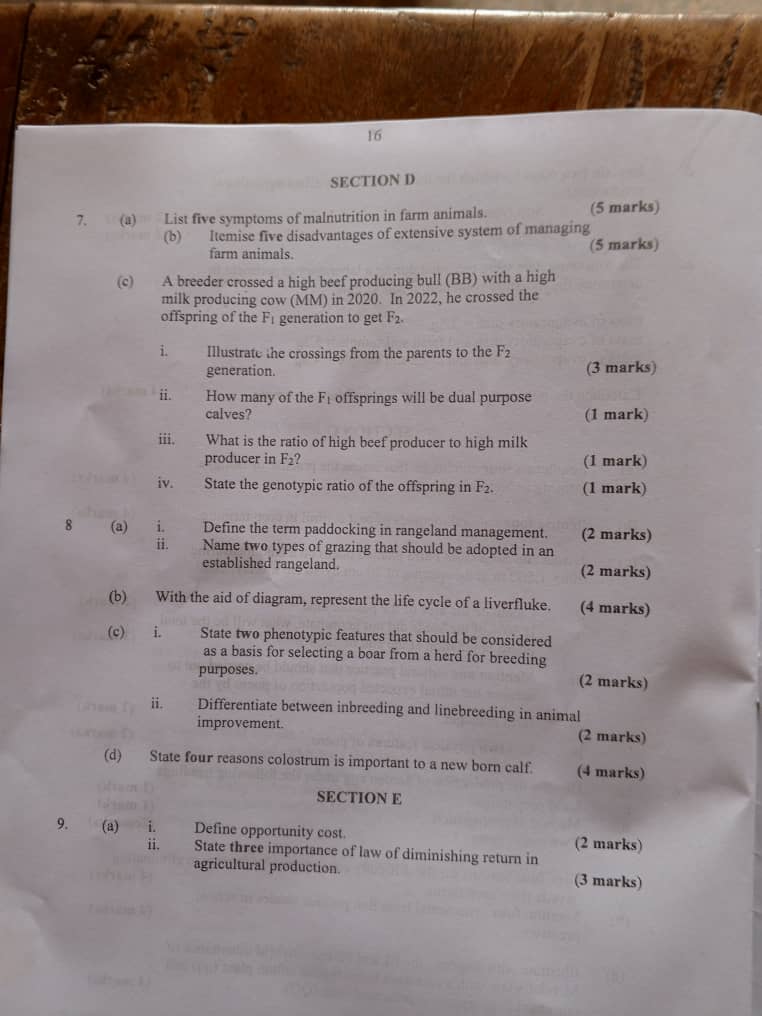
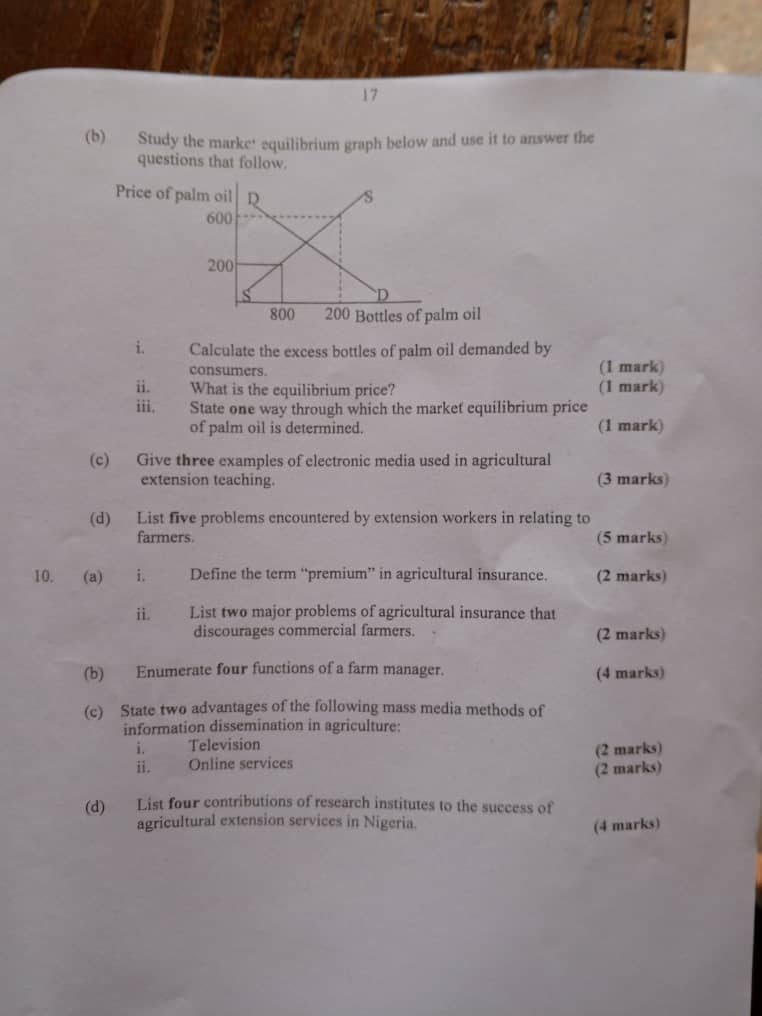
TYPE E
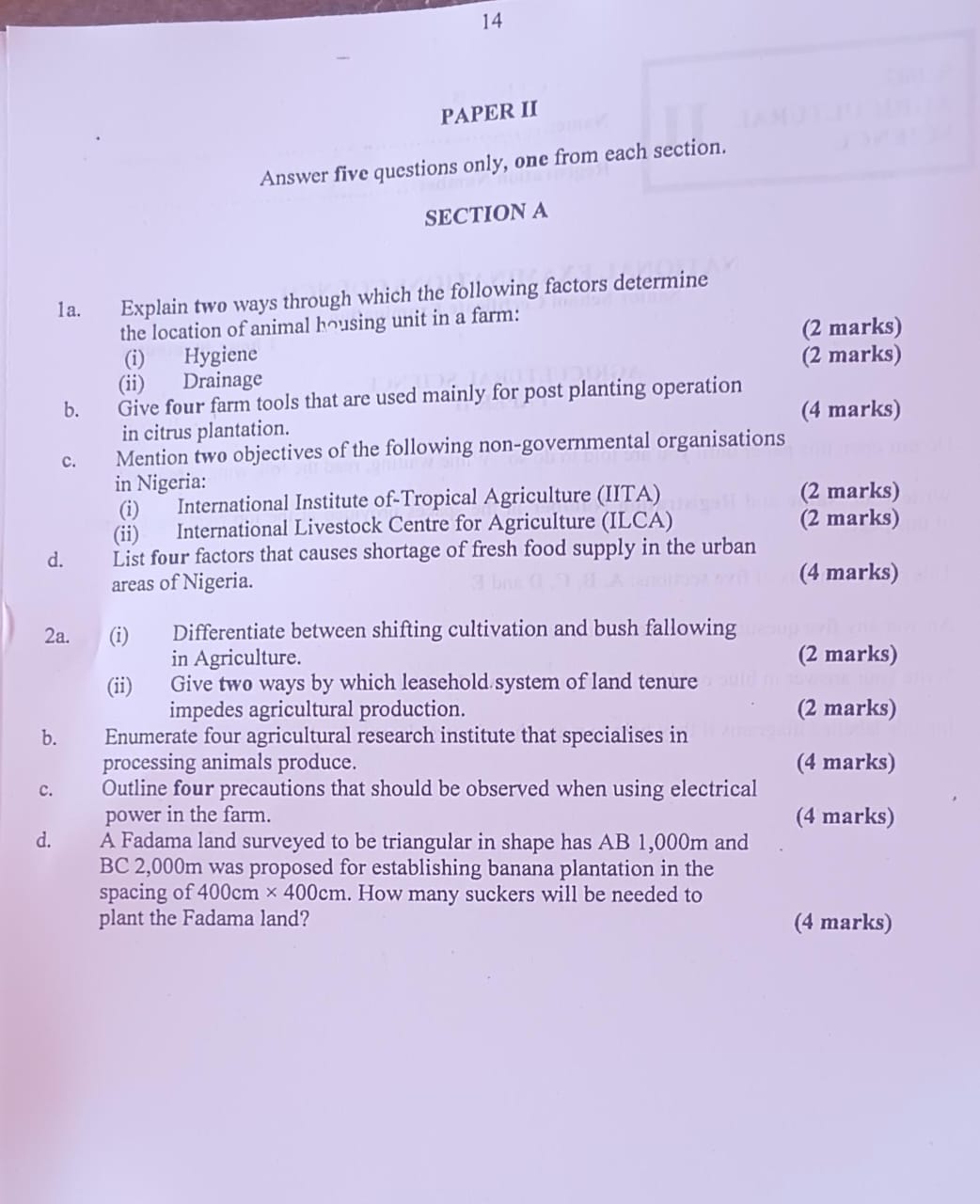
TYPE F
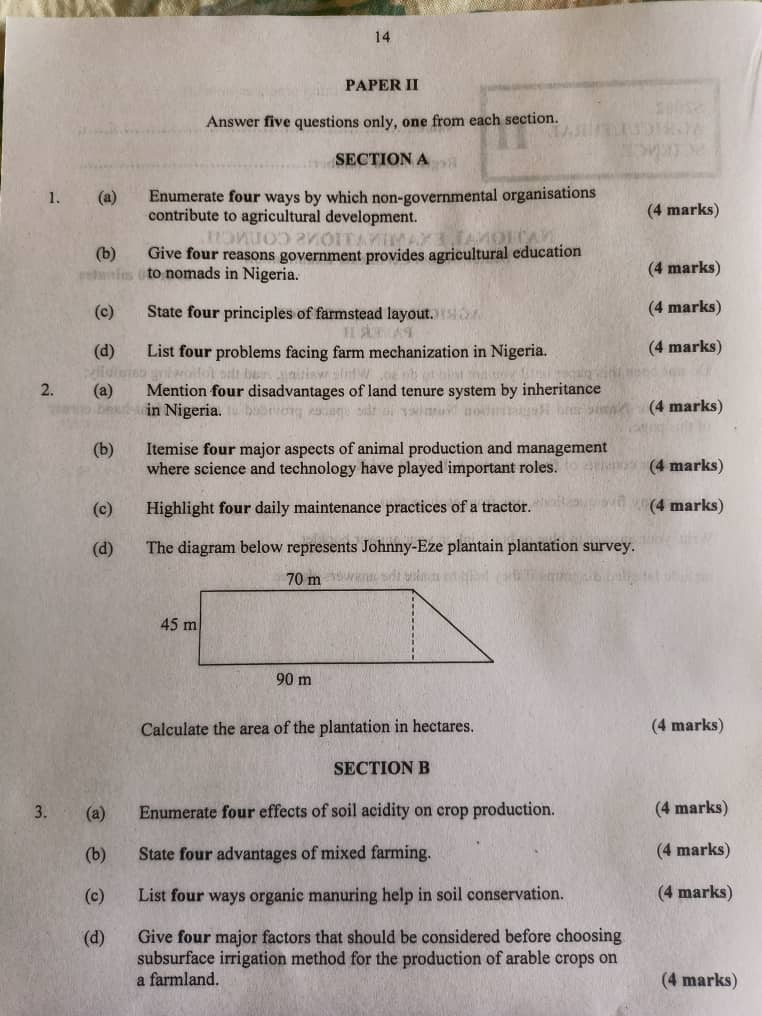
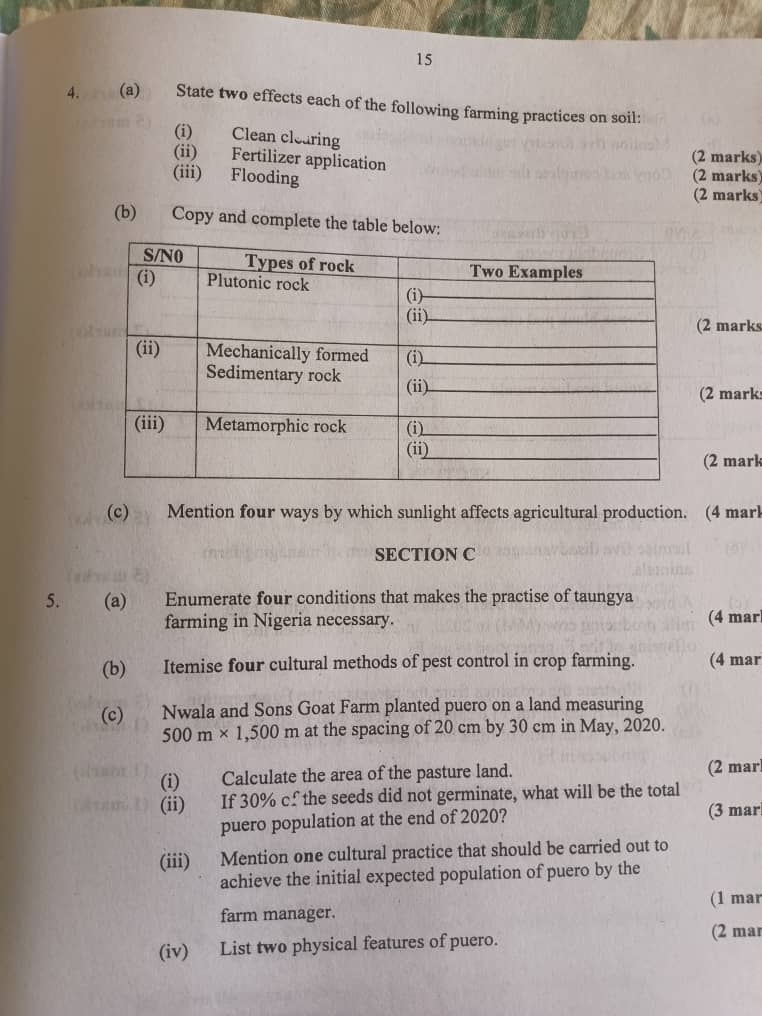
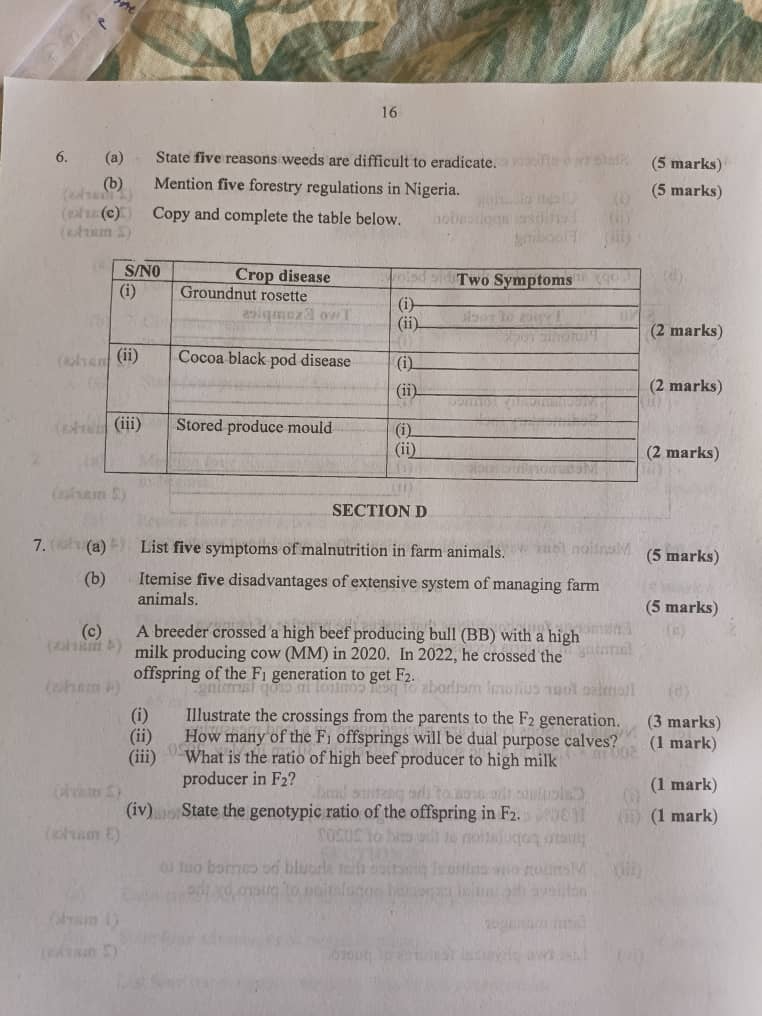
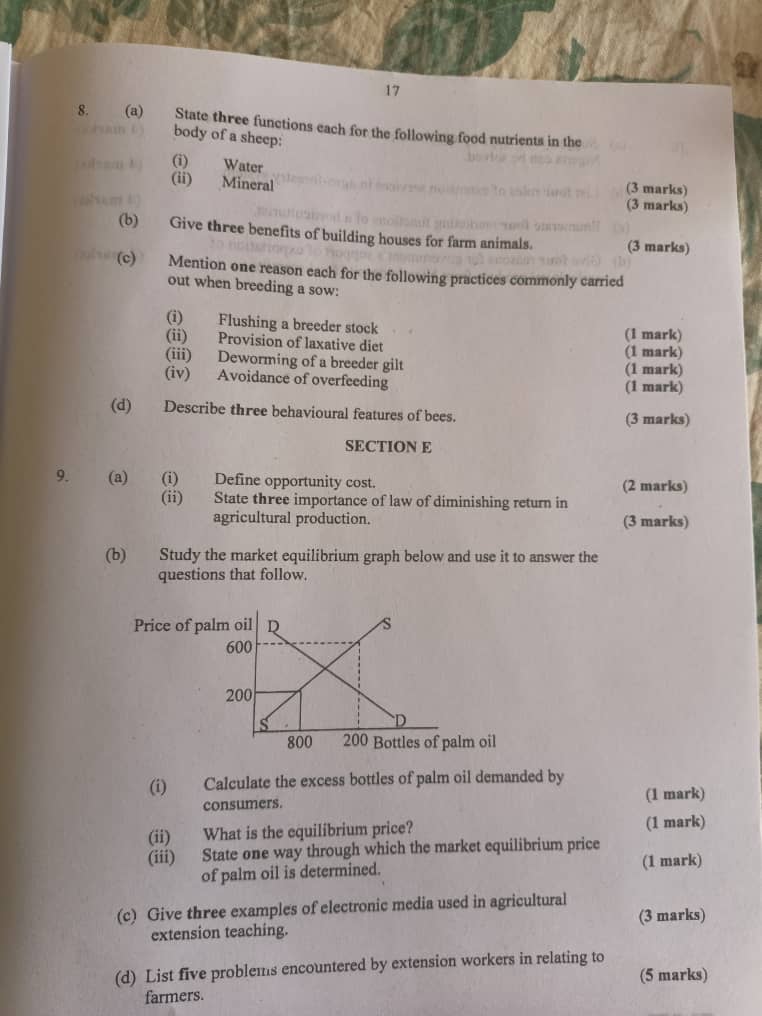
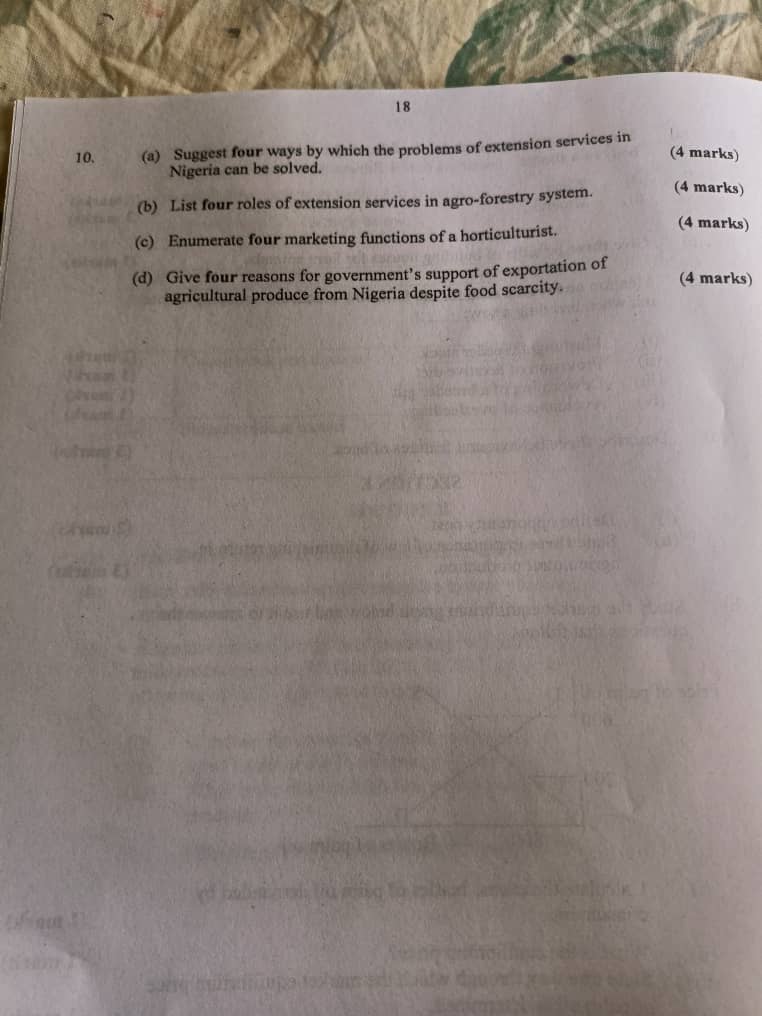
(TYPE G)
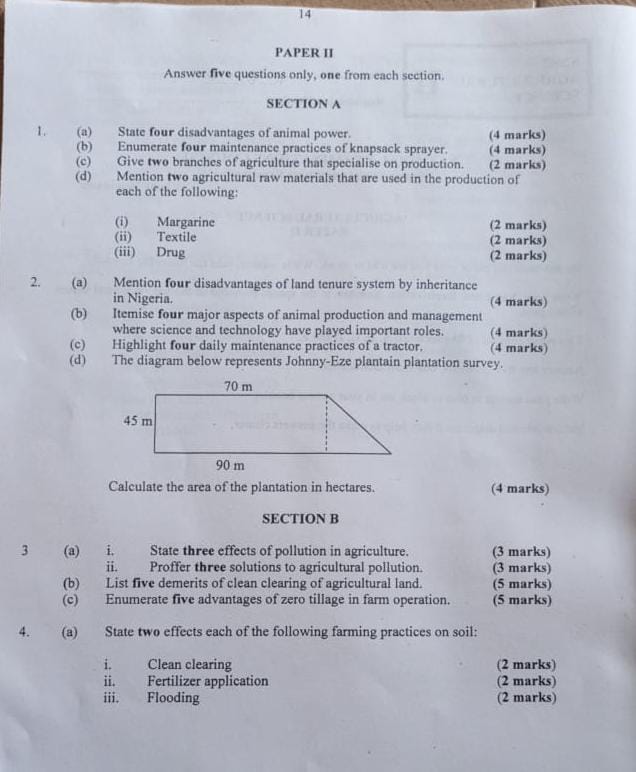
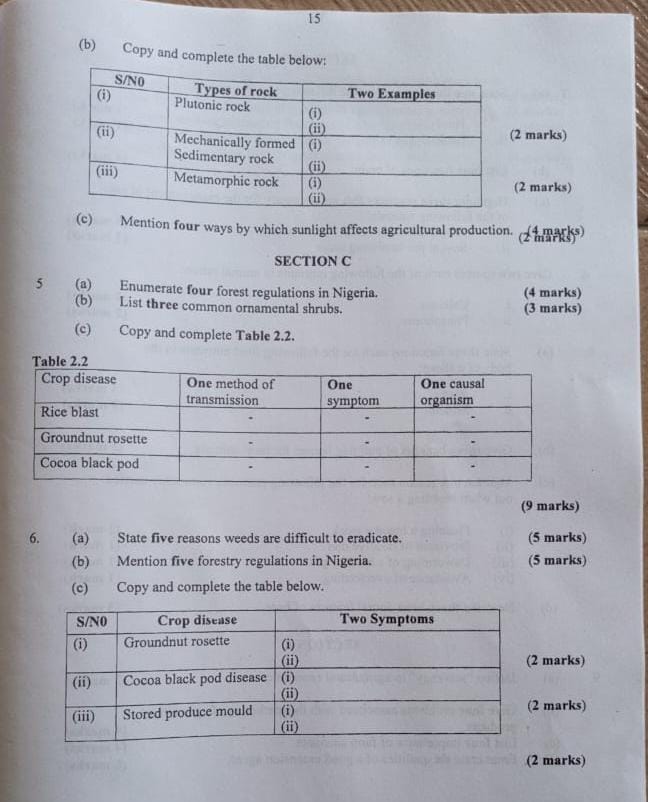
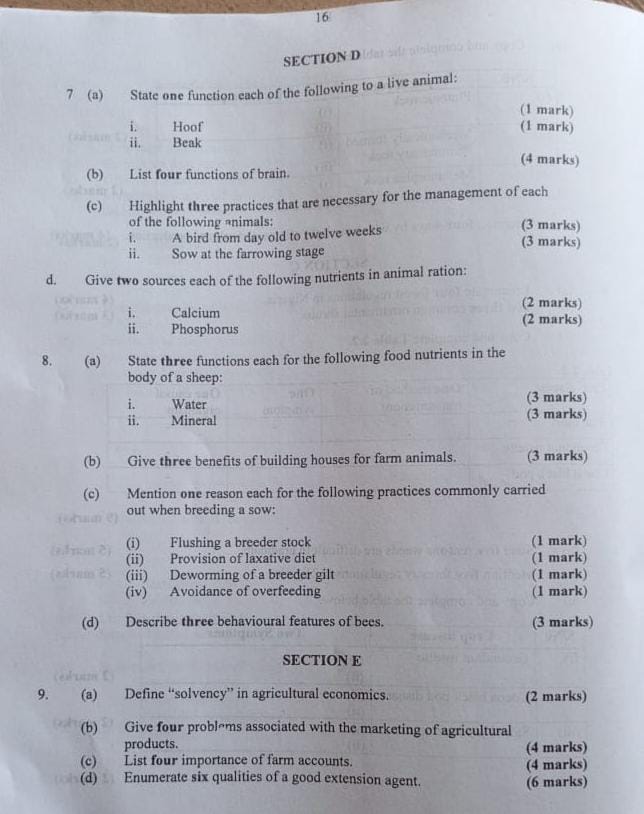
Nice job, thank you